

Social media marketing is a lot to handle. You have to post all the time and keep up with what’s trending. The rules of the media also keep changing. There is a big reason why many businesses do not get the results they want. They do not have an idea of what they want to achieve.
Whether you are taking care of your social media or you are working with a Digital Marketing Agency in Calicut you need to have a plan. Your social media plan needs to have goals that you can actually achieve and measure. This is the way you will be successful.
Understanding the Purpose of Social Media Goals
Before focusing on numbers, it is important to understand the purpose behind your social media activities. Every business uses social media differently depending on its goals. Some focus on building visibility, while others aim to generate leads or increase sales.
If your focus is on The Value of Social Media Marketing for Building Brand Awareness, your strategy should prioritize visibility metrics such as reach and impressions rather than immediate conversions. Aligning your goals with your purpose ensures that your efforts remain focused and effective.
Turn Goals Into Measurable Outcomes
A common mistake in social media marketing is setting vague goals. Statements like “grow my account” or “increase engagement” may sound good but lack clarity.
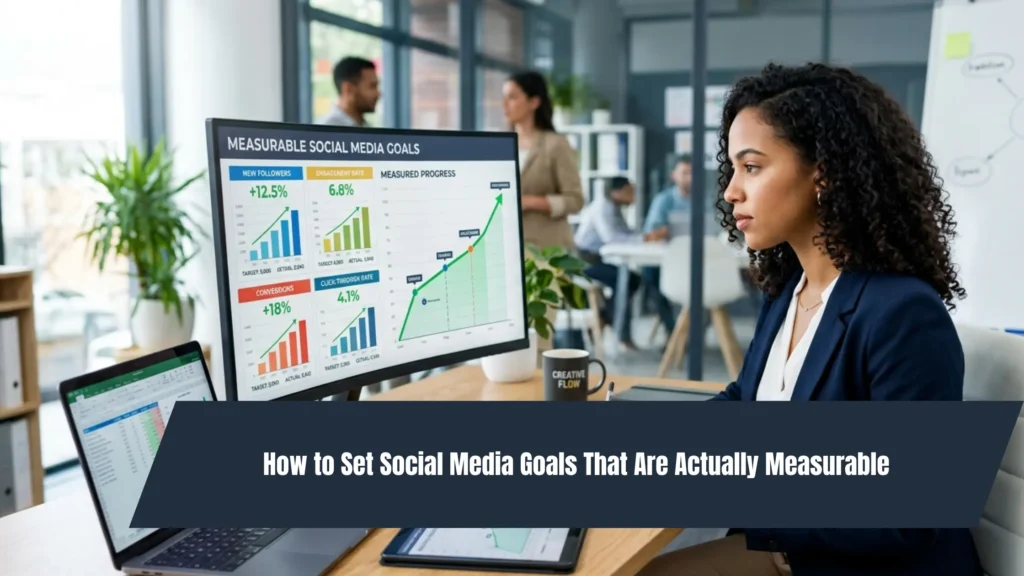
Instead, goals should be converted into measurable outcomes. For instance, increasing engagement from 3% to 6% within two months or generating a specific number of website clicks per month gives you a clear target. A professional approach always focuses on measurable outcomes rather than assumptions.
Use the SMART Framework for Better Results
To make your goals effective, you can use the SMART framework. This approach ensures that your goals are specific, measurable, achievable, relevant, and time-bound.
For example, instead of setting a general goal like increasing brand awareness, a SMART goal would focus on reaching a defined number of users within a set timeframe. This clarity helps in tracking progress and making improvements when needed.
Choose the Right Metrics That Matter
Not all social media metrics provide meaningful insights. It is essential to focus on metrics that align with your business objectives.
For awareness-focused campaigns, reach and impressions are important indicators. When your goal is engagement, metrics such as likes, comments, and shares provide valuable insights. If your objective is to drive traffic, then link clicks and website visits become crucial. For businesses aiming at conversions, leads and sales are the most relevant metrics.
Align Goals With Each Platform
Each social media platform has its own unique purpose, and your goals should reflect that. Instagram is often used for building brand awareness and engagement, while LinkedIn is more effective for professional networking and B2B marketing. Facebook works well for community building, and YouTube is ideal for long-form content and audience retention.
Set Benchmarks Before Scaling
Before setting new goals, it is important to evaluate your current performance. Understanding your existing engagement rate, follower growth, and traffic levels helps you establish realistic targets.
Without a clear baseline, it becomes difficult to measure progress accurately. Benchmarking allows you to track improvements and make data-driven decisions.
Track Progress Using Analytics Tools
Measuring your social media performance requires the use of reliable analytics tools. Platforms like Google Analytics and social media insights dashboards provide valuable data about user behavior, engagement, and conversions.
By analyzing this data regularly, you can identify what works best and refine your strategy accordingly.
Adapt and Improve Continuously
Social media is constantly evolving, which means your strategy should also adapt over time. Regular performance reviews help you identify strengths and areas for improvement.
Following modern strategies, such as those discussed in Top Social Media Trends to Follow in 2026, businesses are focusing more on flexibility and continuous optimization rather than rigid planning.
Common Mistakes to Avoid
Many businesses struggle because they focus on vanity metrics like follower count without considering engagement or conversions. Others set unrealistic goals or fail to track their performance consistently.
Avoiding these mistakes ensures that your efforts remain aligned with your business objectives and deliver meaningful results.
Frequently Asked Questions
1. How do I know if my social media goals are measurable?
A goal is measurable if it can be tracked using data such as engagement rate, reach, clicks, or conversions.
2. Why is the SMART framework important?
The SMART framework helps create clear and structured goals, making it easier to track progress and achieve results.
3. How often should I review my social media goals?
It is recommended to review your goals monthly to ensure they align with your performance and market trends.
Conclusion
Setting measurable social media goals is essential for achieving real success in digital marketing. When your goals are clear, data-driven, and aligned with your business objectives, your strategy becomes more effective and results-oriented.
Whether you are working independently or with a social media marketing agency in Calicut, measurable goals help you track progress, optimize performance, and achieve sustainable growth.
