

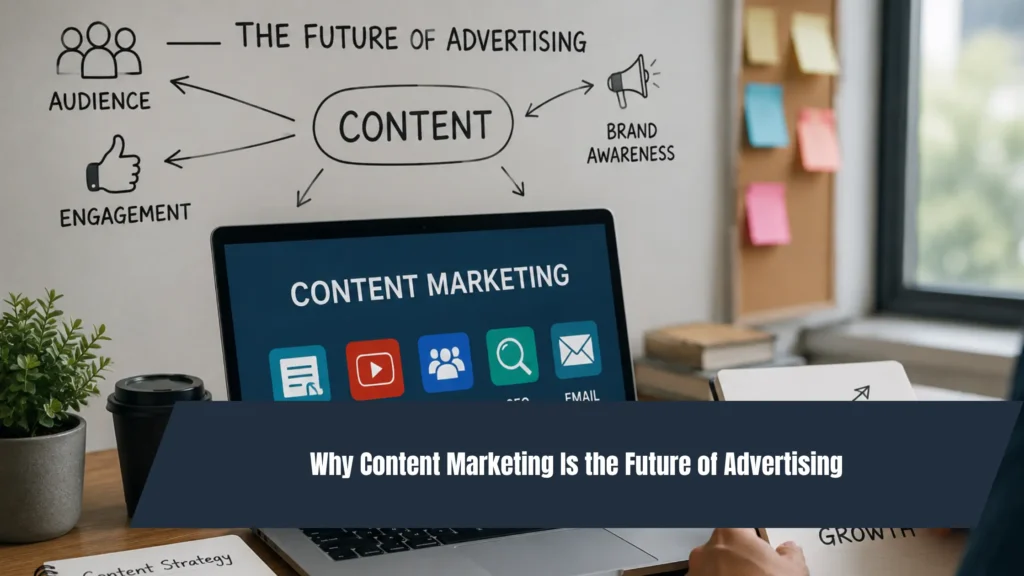
In today’s evolving digital ecosystem, Digital Marketing Company in Calicut strategies clearly show that businesses are shifting from traditional advertising to content driven marketing approaches. This shift is not accidental; it is driven by changing user behavior, search engine evolution, and the demand for more authentic brand communication.
Unlike traditional ads that interrupt users, content marketing attracts audiences by offering value, education, and solutions. This makes it one of the most effective long-term marketing strategies in the digital world.
The Evolution from Traditional Advertising to Content Marketing
Traditional advertising focused mainly on direct promotion through TV, radio, and banner ads. While this approach worked in the past, today’s audience is more informed and selective. People now prefer to research before they buy, which has changed how brands need to communicate. Content marketing fills this gap by providing useful information that helps users make decisions. Instead of selling directly, it builds trust through blogs, videos, guides, and storytelling. This shift is one reason why many brands now work with a Social Media Marketing Agency in Calicut to create content-focused campaigns that connect with audiences more naturally.
Why Content Marketing Dominates the Digital Era
The digital world in 2026 is powered by AI, personalization, and intent-based search. Users expect content that is relevant, quick, and helpful. Search engines like Google now prioritize content that provides real value rather than keyword-heavy pages. Content marketing meets these expectations by focusing on solving user problems instead of pushing sales messages. It also works across multiple channels such as SEO, social media, email marketing, and influencer collaborations, making it a central part of modern digital strategies.
The Role of Trust in Content Marketing Success
Trust is the foundation of every successful brand. Content marketing builds this trust by educating users instead of directly selling to them. When a brand consistently provides useful information, users begin to see it as an authority in the industry. This leads to higher engagement, better conversions, and long-term customer loyalty. Businesses increasingly rely on storytelling, case studies, and educational content to build emotional connections with their audience.
How Content Marketing Drives Business Growth in 2026
Content marketing is not just about visibility it is a structured system for business growth. It helps attract the right audience, nurture leads, and convert them into customers. Understanding How Does Content Marketing Work for Business Growth in 2026? is important because modern marketing is no longer linear. It involves multiple touchpoints where content plays a key role at every stage. From awareness to decision-making, content influences user behavior and supports SEO performance, brand authority, and organic traffic growth.
SEO and Content Marketing: A Powerful Combination
SEO and content marketing are deeply connected. Modern search engines focus on semantic understanding, meaning they evaluate context rather than just keywords. This means businesses must create high-quality, structured, and informative content that answers user queries clearly. Related concepts like search intent, topical authority, user engagement, and E-E-A-T (Experience, Expertise, Authoritativeness, Trustworthiness) play a major role in ranking content effectively. When optimized correctly, content marketing becomes a long-term asset that continuously brings traffic and leads.
Content Marketing Trends Shaping the Future
The future of advertising is heavily influenced by content-based strategies. One major trend is personalized content delivery, where AI helps brands understand user preferences and deliver targeted messaging. Another trend is the rise of short-form video content, interactive blogs, and storytelling-based campaigns that increase engagement across platforms. Brands are also investing more in educational content that provides real value instead of promotional noise.
A strong example of this evolution can be seen in The Power of Content creation in Social Media Marketing, which highlights how storytelling improves audience engagement and brand visibility.
Why Businesses Must Adopt Content Marketing Now
Businesses that fail to adopt content marketing risk losing visibility in a highly competitive digital environment. Customers today trust brands that educate them, not those that constantly sell to them. Content marketing ensures that businesses remain relevant, visible, and trustworthy across all digital channels.vIt also reduces dependency on paid advertising by generating consistent organic traffic over time.
FAQ Section
What makes content marketing the future of advertising?
Content marketing focuses on value and engagement rather than interruption, making it more effective in today’s digital environment.
How does content marketing help businesses grow?
It improves brand awareness, increases organic traffic, builds trust, and supports customer conversion at every stage.
Why is content marketing better than traditional advertising?
Because it educates and engages users instead of directly pushing sales messages, resulting in stronger long-term relationships.
Is content marketing important for small businesses?
Yes, it helps small businesses compete with larger brands by improving visibility and credibility online.
What type of content works best in 2026?
Blogs, videos, social media storytelling, and educational content perform best due to high user engagement and search engine preference.
Conclusion
Content marketing is no longer just a marketing tactic it is the foundation of modern advertising. As user behavior continues to evolve, businesses must focus on delivering meaningful, valuable, and engaging content. The future of advertising lies in storytelling, education, and trust-building rather than interruption. Brands that invest in content today will lead the digital world tomorrow, while others will struggle to keep up with changing trends.
